


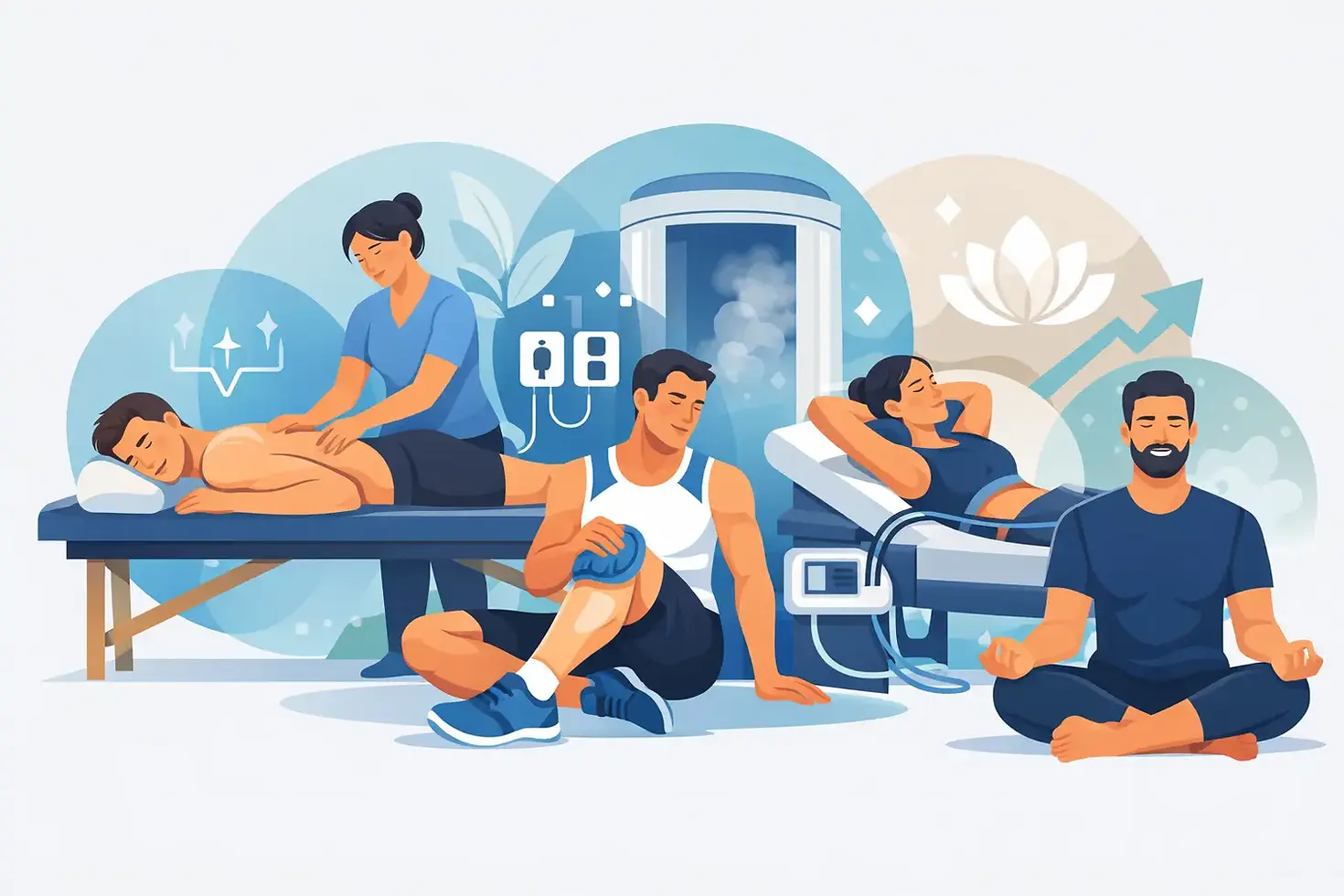
Sports Recovery Treatments That Actually Help

The day after a hard workout tells the truth. If your legs feel heavy on the stairs, your shoulders stay tight through the workday, or a small strain keeps showing up every week, recovery is no longer a nice extra. Sports recovery treatments can help bridge the gap between pushing your body and taking proper care of it, especially when you want to keep training without letting fatigue turn into a bigger problem.
For many active adults, recovery gets treated as an afterthought. You train hard, squeeze in some stretching, drink more water, and hope your body catches up. Sometimes that works. Sometimes it does not. The difference usually comes down to whether your recovery plan matches your actual stress load, movement patterns, and goals.
What sports recovery treatments are really for
At their best, sports recovery treatments are not just about feeling good for an hour. They are meant to help your body move out of a stressed, overloaded state and back toward balance. That can mean reducing muscle tension, improving circulation, calming an irritated area, supporting range of motion, or giving your nervous system a chance to settle down.
That matters whether you are training for an event or simply staying active while managing a full schedule. A runner dealing with calf tightness, a recreational tennis player with shoulder fatigue, and a busy professional lifting weights before work may all need recovery support, but not in the same form.
This is where personalized care matters. The most effective approach is rarely a one-size-fits-all menu of add-ons. It starts with understanding what is sore, what feels restricted, how long it has been going on, and what your body is being asked to do next.
The most effective sports recovery treatments depend on the problem
Massage and bodywork are often the first treatments people think of, and for good reason. Skilled hands-on work can help reduce muscle guarding, address compensation patterns, and improve tissue mobility in ways that general stretching at home may not. If your quads stay locked up after cycling or your upper back tightens every time training volume goes up, bodywork can help restore a better baseline.
That said, not every sore athlete needs deep pressure. Sometimes the right session is focused and corrective. Other times it should be slower and more restorative, especially if your system is fatigued overall. More intensity is not always better. If the goal is to help your body recover, treatment should support that goal, not create another layer of stress.
Stretch-based work and mobility-focused sessions can also be useful when stiffness is the main issue. If you feel limited in your hips, ankles, or shoulders, improving range of motion may take pressure off nearby tissues that have been overworking to compensate. The trade-off is that mobility work only lasts if your training habits and movement patterns improve alongside it.
For more stubborn areas, shockwave therapy may be considered as part of a recovery plan. This is generally better suited for localized issues that have not responded to lighter care alone, such as persistent tendon discomfort or chronic tightness around a specific structure. It is not the right fit for every person or every stage of recovery, which is why proper assessment matters. Used appropriately, it can support tissue healing and help move a lingering issue forward.
Recovery may also need to include services that do not look athletic on the surface. Stress, poor sleep, and nervous system overload can slow physical recovery more than many people realize. When your body never fully downshifts, soreness lingers, tension stays high, and you may feel less resilient from session to session. Restorative treatments that calm the system can be just as valuable as performance-focused work.
When to book sports recovery treatments
A lot of people wait until pain forces the issue. By that point, the body has usually been compensating for a while. A better time to book is when you notice a pattern: recurring tightness, reduced range of motion, slower recovery between workouts, or a sense that one area is carrying too much load.
There is also value in timing treatment around your training cycle. A lighter restorative session may work well after a demanding week or event when the goal is to reduce overall fatigue. A more targeted session might make sense when a specific area is limiting movement or affecting performance. Right before a competition or intense workout, however, aggressive work can backfire. Tissue that is too tender or overstimulated may not perform the way you want.
This is one reason thoughtful scheduling matters. Recovery is not just about what treatment you choose. It is about when you choose it and what your body needs in that moment.
Signs your body may need more than rest
Soreness that lasts longer than expected is one sign. So is a joint that feels restricted even after warming up. You may also notice that your posture changes as the day goes on, or that your stride, squat, or overhead reach feels uneven. These are not always serious red flags, but they often mean your body is not recovering cleanly between demands.
If sleep quality is down, stress is high, and your muscles feel constantly switched on, your recovery problem may be less about one workout and more about total body load. That is where an integrated approach becomes especially helpful.
Why professional care often works better than self-care alone
Foam rollers, stretching apps, and at-home massage tools all have their place. They can absolutely support recovery. But they also have limits. Most people are not great at identifying the root of their restriction, and it is easy to overwork the area that hurts while missing the pattern behind it.
Professional treatment brings both technique and perspective. A trained therapist can assess how one area may be affecting another, adjust pressure and method based on your response, and help you understand whether the issue is likely short-term overload or something that needs closer attention.
That guidance can save time. It can also reduce the cycle of guessing, overcorrecting, and hoping for the best. In a well-run practice, the session should not feel transactional. It should feel collaborative, with clear attention to your goals, comfort, and next steps.
For clients in Atlanta who want that blend of therapeutic skill and restorative care, Atlanta Touch Therapy reflects the kind of model that makes recovery feel more intentional. The goal is not simply to provide a relaxing hour. It is to help you leave with a better plan for how your body moves and heals.
What to expect from a quality recovery session
A good recovery experience starts before hands-on work begins. You should be asked about your activity level, your symptoms, what makes them better or worse, and what you are preparing your body to do next. That intake is not filler. It shapes the treatment.
During the session, quality matters more than trying to cover everything. A focused treatment on the areas creating the biggest limitation is often more effective than broad, generalized work. You should also feel safe to communicate. Pressure, positioning, and pacing should be adjusted to your body, not forced into a preset routine.
After the session, useful guidance can make the results last longer. That might mean hydration, lighter movement for the rest of the day, basic mobility homework, or simply a recommendation on when to return. Recovery works best when the treatment and the follow-through support each other.
Recovery is about consistency, not rescue
The biggest misconception around sports recovery treatments is that one great session fixes everything. Sometimes you do feel dramatically better after a single visit, and that matters. But lasting improvement usually comes from paying attention sooner, treating patterns before they become setbacks, and choosing care that matches both your training and your life.
If you are active, ambitious, and asking a lot from your body, recovery deserves the same respect as the workout itself. The right treatment should help you feel looser, steadier, and more confident in your next step - not just for today, but for the pace you want to sustain.


Comments