


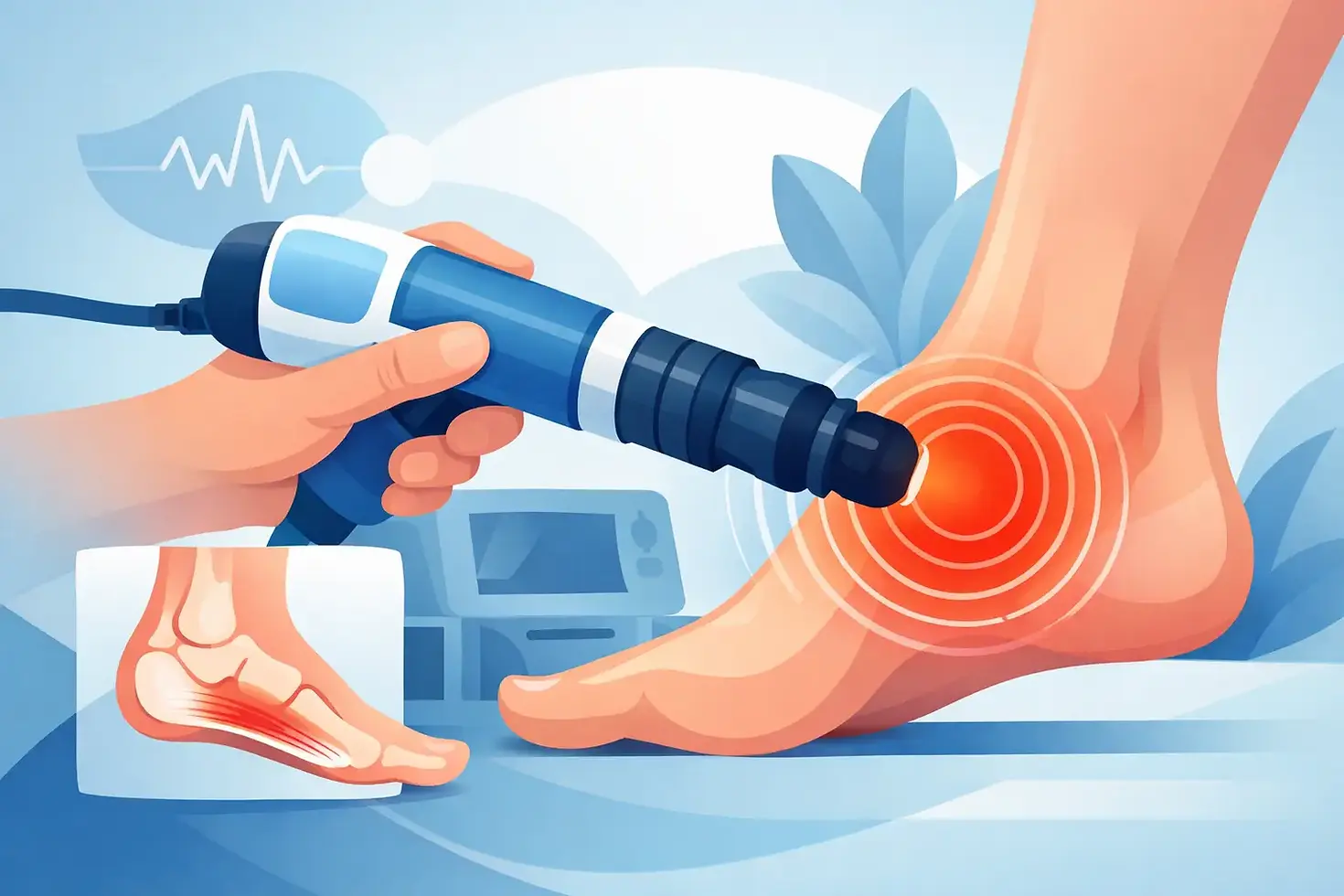
Shockwave Therapy for Plantar Fasciitis

That first step out of bed can tell you everything. If your heel feels sharp, tight, or irritated before it loosens up, plantar fasciitis is often the reason. For many people, shockwave therapy for plantar fasciitis becomes part of the conversation after stretching, rest, and footwear changes have not brought enough relief.
Heel pain can be surprisingly disruptive. It affects morning routines, workouts, long workdays, and even simple errands. When pain lingers, most people are not looking for a trendy fix. They want a treatment that feels grounded, professional, and worth their time. That is exactly why shockwave therapy gets attention.
What plantar fasciitis actually feels like
Plantar fasciitis involves irritation of the plantar fascia, the thick band of tissue along the bottom of the foot that helps support the arch. When that tissue is overloaded, tiny areas of damage and inflammation can build up over time. The result is often pain at the heel, especially with the first few steps in the morning or after sitting for a while.
Some people feel a stabbing sensation. Others describe it as a deep ache, a pulling feeling through the arch, or tenderness that builds during the day. It is common in runners and active adults, but it also shows up in people who spend long hours standing, wear unsupportive shoes, or have tight calves and restricted ankle mobility.
The frustrating part is that plantar fasciitis can become stubborn. It may calm down for a week, then flare again after a busy day or a return to exercise. That pattern often leads people to look for something more targeted than home care alone.
How shockwave therapy for plantar fasciitis works
Shockwave therapy uses acoustic waves delivered to the painful area of the foot. Despite the name, there is no electrical shock involved. The treatment is designed to stimulate the tissue, increase local circulation, and encourage the body’s natural repair response.
In practical terms, the goal is not to numb the foot for a few hours. It is to help the tissue move out of a chronic irritated state and toward healing. That distinction matters. Plantar fasciitis is often not just about inflammation in the short-term sense. In longer-lasting cases, the tissue may be strained, thickened, and slow to recover. Shockwave therapy is used to address that stalled healing process.
During a session, a provider applies the treatment head to the affected area and delivers a controlled series of pulses. The sensation varies. Some people say it feels intense but manageable. Others notice discomfort around the most tender spots, especially if the heel has been painful for months. A thoughtful provider adjusts the settings based on your tolerance and the condition of the tissue.
When shockwave therapy makes sense
Shockwave therapy is often considered when heel pain has not improved enough with conservative care. That may include stretching, ice, massage, activity modification, orthotics, or better footwear. It is not always the first step, but it can be a very reasonable next step when the pain keeps returning.
This treatment tends to be a better fit for chronic plantar fasciitis than for a brand-new flare-up. If your symptoms have been present for several weeks or months, and especially if they are affecting exercise, work, or daily comfort, it may be worth discussing.
It also helps to think in terms of function, not just pain. If your heel pain has changed the way you walk, reduced your activity, or created tension in the calves and hips from compensation, waiting it out may not be the best strategy. The longer the body adapts around pain, the more layered recovery can become.
What to expect during treatment
A quality experience starts with an assessment. Before treatment begins, the provider should ask where the pain is located, when it started, what makes it worse, and what you have already tried. They may also look at calf tightness, ankle motion, gait, and pressure patterns through the foot. That context matters because plantar fasciitis rarely exists in isolation.
The session itself is relatively short. Gel is usually applied to help the treatment head move smoothly and deliver the acoustic waves effectively. The provider then works over the painful area and sometimes the surrounding tissue, depending on the treatment plan.
Afterward, you may notice temporary soreness, tenderness, or a warm, worked-over feeling in the foot. That is not unusual. Some clients feel improvement quickly, while others notice gradual changes over a series of sessions. Recovery is usually measured in better first steps, less day-to-day irritation, and a steadier return to normal movement.
How many sessions are usually needed
This depends on how long the pain has been present, how irritated the tissue is, and what else is contributing to the problem. Many people need a series rather than a one-time appointment. A common approach is several sessions spaced out over a few weeks.
That does not mean more is always better. It means consistency matters. Chronic heel pain tends to respond best when treatment is paired with supportive care between sessions, such as calf stretching, load management, footwear adjustments, and avoiding the activities that repeatedly trigger the pain.
If someone expects one session to erase months of irritation, they may be disappointed. If they approach it as part of a personalized recovery plan, expectations are usually more realistic and outcomes tend to be better.
Benefits and trade-offs to know
The biggest benefit of shockwave therapy for plantar fasciitis is that it aims to support healing rather than simply cover symptoms. It is non-surgical, requires little downtime, and can be appealing for people who want a more active treatment approach without jumping to invasive options.
There are trade-offs. It can be uncomfortable during treatment, especially over highly sensitive tissue. Results are not always immediate. And like most therapy-based care, it works best when the bigger picture is addressed. If your shoes are unsupportive, your calves are very tight, or your daily routine keeps overloading the foot, treatment alone may not hold.
There are also situations where shockwave therapy may not be appropriate. Pregnancy, certain circulatory issues, nerve-related concerns, active infection, or specific medical conditions may affect whether this is a good option. That is why professional screening matters.
Why a whole-body view matters
Foot pain often starts in the foot, but it does not always stay there. Tight calves can increase tension through the plantar fascia. Limited ankle mobility can change how force moves through the heel. Hip weakness, training volume, standing habits, and recovery patterns can all influence whether the tissue keeps getting irritated.
That is why the best care plans rarely stop at one tool. Shockwave therapy can be effective, but it is even more valuable when it is part of a thoughtful treatment strategy. In a wellness-centered setting like Atlanta Touch Therapy, that may mean combining targeted treatment with bodywork, mobility guidance, and practical aftercare so the foot is supported from more than one angle.
For clients who appreciate both professionalism and a calming environment, this matters. Recovery feels different when care is not rushed, the treatment plan is explained clearly, and your provider treats your pain as something to understand, not just something to get through.
Questions worth asking before you book
If you are considering shockwave therapy, ask how the provider evaluates plantar fasciitis, what a typical care plan looks like, and whether they offer guidance between sessions. It is also reasonable to ask what the treatment feels like, how activity should be modified afterward, and what signs suggest progress.
Good care should leave you more informed, not more confused. You should understand why the treatment is being recommended, what it can realistically do, and what your role is in the healing process.
Is shockwave therapy right for your heel pain?
It may be, especially if your plantar fasciitis has become persistent and you are ready for a more targeted approach. The right candidate is not just someone with heel pain. It is someone who wants a treatment plan built around tissue healing, movement quality, and sustainable relief.
If that sounds like what you have been missing, shockwave therapy may be a meaningful next step. The goal is not just to make walking feel easier this week. It is to help your body move with less guarding, less irritation, and more confidence over time.
Heel pain has a way of shrinking your world one step at a time. The right care should help you claim those steps back with more comfort, more support, and a clearer path forward.


Comments