


How to Relieve Neck Stiffness Safely

You usually feel neck stiffness at the worst possible moment - backing out of the driveway, turning toward a second monitor, or trying to sleep comfortably after a long day. If you are wondering how to relieve neck stiffness, the goal is not just to get through the next hour. It is to calm irritated tissue, restore easier movement, and keep the same pattern from returning every few days.
Neck tension can build for several reasons at once. Long hours at a desk, stress that settles into the shoulders, sleep position, workouts, travel, and even dehydration can all contribute. Sometimes the neck itself is the problem. Other times, the upper back, jaw, shoulders, or posture are driving the strain.
How to relieve neck stiffness at home
For most mild to moderate stiffness, start with simple care that reduces guarding without forcing the neck to move more than it wants to. A little relief early often prevents a small issue from becoming a full weekend problem.
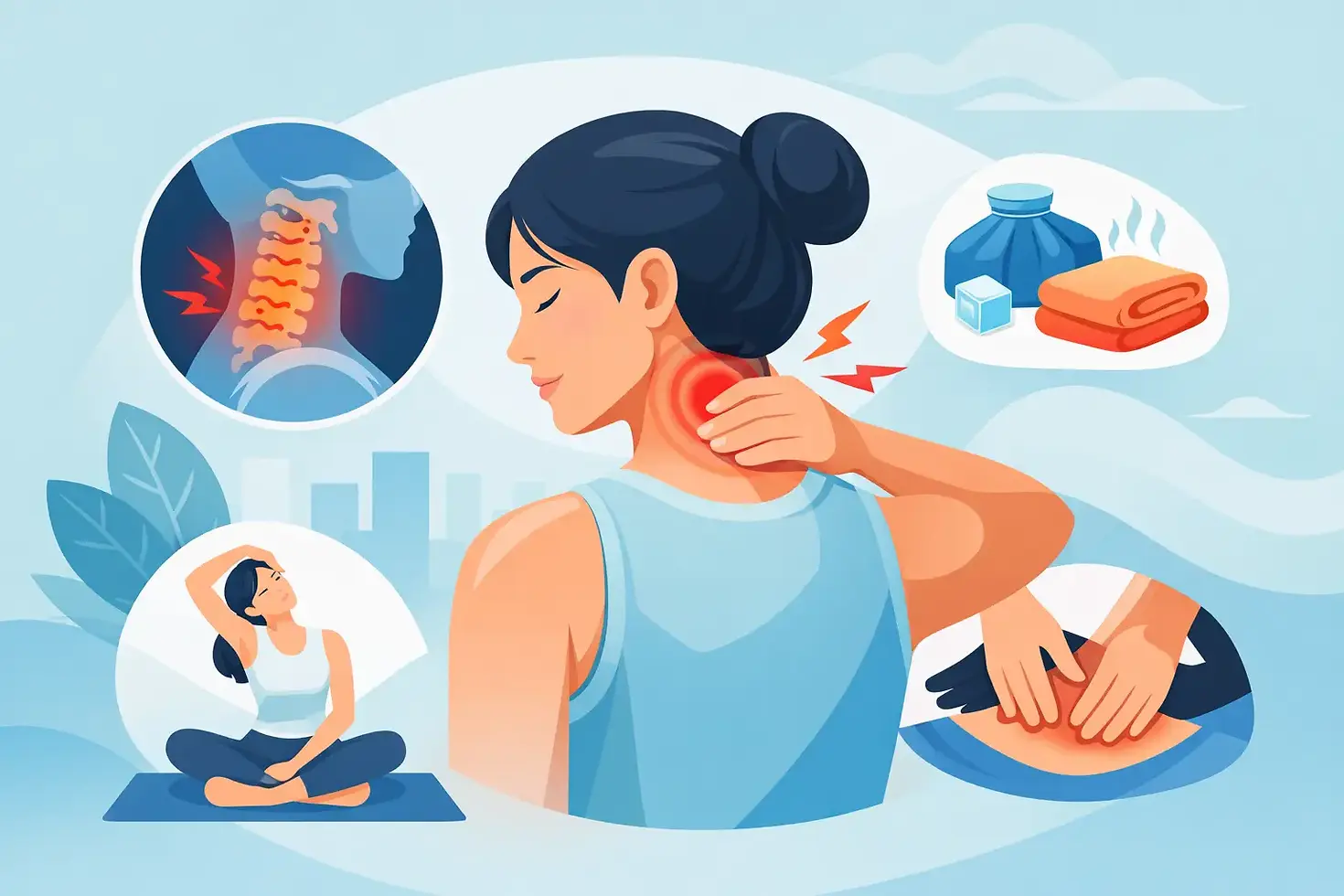
Heat is often the fastest way to help tight muscles soften. A warm shower or heating pad for 10 to 15 minutes can improve circulation and make movement feel less restricted. If the area feels freshly irritated, swollen, or inflamed after an awkward sleep or sudden strain, a cold pack for short intervals may feel better at first. It depends on whether the tissue feels more tight and protective or more hot and aggravated.
Gentle movement matters more than perfect stretching. Many people try to fix stiffness by cranking the head side to side until they feel a strong pull. That usually backfires. Instead, slowly nod up and down, turn your head right and left within a comfortable range, and tip each ear toward the shoulder without lifting the shoulder up. Stay easy. The goal is to remind the nervous system that movement is safe.
A short walk can help more than another hour on the couch. When the rib cage, shoulders, and upper back start moving, the neck does not have to do all the work. If you have been sitting for most of the day, simply standing up and walking for five minutes can noticeably reduce that locked-up feeling.
Why neck stiffness keeps coming back
Recurring neck stiffness is rarely random. It usually reflects a pattern your body repeats often enough that the muscles never fully reset.
Posture is one common factor, but posture is not just about sitting up straight. It is about how long you stay in one position. Even a good setup becomes a problem if your head stays forward for hours, your shoulders round in, or your arms are unsupported while typing. Your neck then works overtime to hold everything up.
Stress is another major driver. When people are under pressure, they often brace through the jaw, shoulders, and upper traps without realizing it. That low-grade tension can stay switched on all day, then show up as stiffness the next morning.
Sleep setup also matters. A pillow that is too high, too flat, or too firm for your usual sleep position can leave the neck compressed or side-bent for hours. If you often wake up stiff, your nighttime support deserves a closer look.
Then there is training load. Strength work, cycling, long runs, pickleball, golf, and even a hard upper-body session can trigger neck tightness if the shoulders and upper back are not recovering well. The neck often compensates when surrounding tissues are fatigued or restricted.
The stretches and resets that help most
If you want to know how to relieve neck stiffness without making it worse, think gentle and repeatable. One aggressive stretch is less useful than a few calm resets spread throughout the day.
Start with chin tucks. Standing or sitting tall, draw your chin straight back as if you are making a small double chin. Hold for a couple of seconds, then release. This helps counter the forward-head position that builds during screen time.
Shoulder blade motion is just as important. Roll the shoulders up, back, and down slowly. Then squeeze the shoulder blades lightly together and release. When the upper back starts participating again, the neck often eases up.
A doorway chest stretch can also help if you spend a lot of time at a desk. Tight chest muscles can pull the shoulders forward and increase strain through the front and back of the neck. Keep the stretch light and breathe steadily.
Finally, try controlled breathing. A few slow breaths with a longer exhale can reduce the bracing pattern that feeds tension. This sounds simple, but it is effective. Tight muscles are not always a strength problem. Sometimes they are a stress response.
Small posture changes that make a real difference
The best posture advice is practical enough to use during a normal workday. You do not need a perfect ergonomic setup to feel better, but you do need less strain.
Keep your screen closer to eye level so your head is not constantly dropping forward. Support your forearms when typing if possible. If you take calls often, avoid pinning the phone between your ear and shoulder. If you drive a lot, bring the seat closer so you are not reaching for the wheel.
More important than any single adjustment is changing position often. Set a reminder to stand up, stretch, or walk every 30 to 60 minutes. The neck likes variety. Static positions, even comfortable ones, tend to create stiffness over time.
When massage and bodywork can help
Sometimes self-care is enough. Sometimes the tissue is too guarded, the pattern is too established, or the stress load is too high to resolve on its own. That is where skilled bodywork can be especially valuable.
Therapeutic massage can help reduce muscle guarding, improve circulation, and restore motion through the neck, shoulders, and upper back. It can also uncover related contributors that are easy to miss on your own, such as tight pecs, elevated shoulders, jaw tension, or thoracic restriction. For many clients, the biggest benefit is not just immediate relief. It is having the right areas addressed in the right order.
A thoughtful session should not feel rushed or generic. The most effective care starts with listening, assessing movement, and matching the approach to what your body actually needs that day. At Atlanta Touch Therapy, that kind of individualized care is central to the treatment experience because neck stiffness often reflects more than one issue at once.
There is also a trade-off to keep in mind. Deep pressure is not always better, especially when the neck is already irritated. In some cases, slower and more precise work gets better results than pushing hard into protective tissue. A trained therapist will know when to calm the area down and when to work more specifically.
When neck stiffness is a sign to pause and get evaluated
Most episodes of neck stiffness are muscular and improve with time, movement, and supportive care. But some symptoms deserve more caution.
If your stiffness follows a fall, car accident, or direct injury, it is wise to get medical guidance. The same applies if you have numbness, tingling, weakness into the arm or hand, severe headache, fever, dizziness, or pain that is intense and worsening rather than easing. If the neck feels stuck for days with no improvement, or the problem keeps returning despite your efforts, it may be time for a more complete evaluation.
That does not mean something serious is always wrong. It simply means persistent symptoms deserve a more informed plan.
Building a routine that prevents the next flare-up
Lasting relief usually comes from a combination of treatment and habits. A few minutes of mobility work in the morning, regular movement breaks during the day, better pillow support, and stress management can go a long way. If you exercise, pay attention to how your upper body training, recovery, and form affect your neck in the following 24 hours.
It also helps to notice your personal triggers. For one person, it is laptop work on the couch. For another, it is long drives or clenching during stressful weeks. Once you know the pattern, prevention becomes much more realistic.
Neck stiffness responds best when you treat it early, gently, and with some curiosity about what your body is asking for. Relief is not always about doing more. Often, it comes from doing the right few things consistently and giving your body enough support to let go.


Comments