


Massage vs Chiropractic Care: Which Fits?
- Rachael N. Turner

- Jun 29
- 6 min read
You wake up with a stiff neck, your lower back feels tight by noon, and by the end of the week your whole body is carrying stress. That is usually when the question comes up: massage vs chiropractic care - which one do you actually need? The answer depends on what is driving your discomfort, how your body responds to treatment, and whether your goal is short-term relief, better movement, or a more complete recovery plan.
Both massage therapy and chiropractic care can play a valuable role in wellness and pain management. They are not interchangeable, and neither is automatically better. The right fit often comes down to your symptoms, your health history, and the kind of support you want from your provider.
Massage vs chiropractic care: the core difference
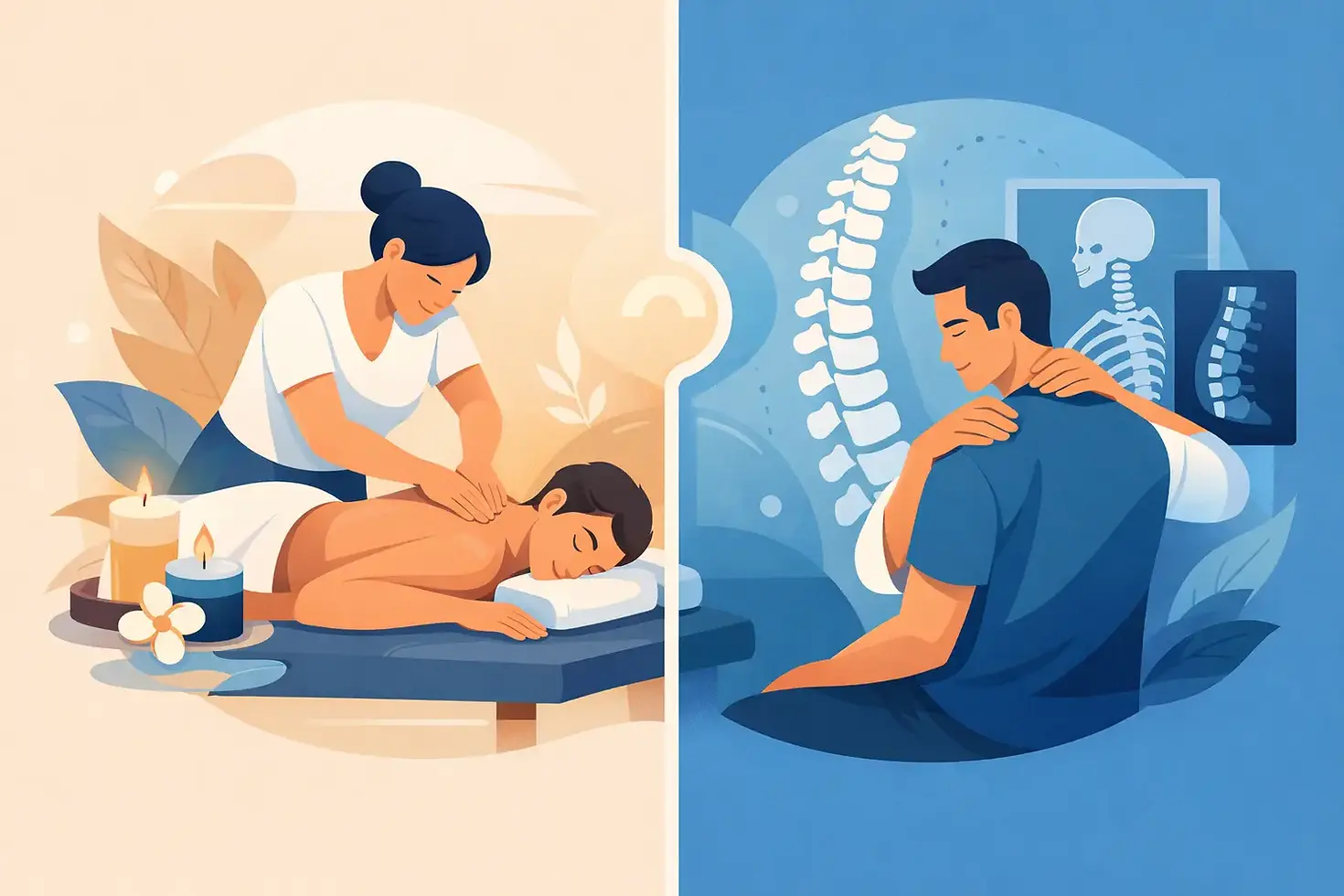
The simplest distinction is this: massage therapy focuses primarily on muscles and soft tissue, while chiropractic care focuses primarily on spinal alignment, joints, and the nervous system's relationship to structure.
Massage works through hands-on manipulation of muscles, fascia, and surrounding soft tissue. A skilled therapist can reduce tension, improve circulation, support recovery after physical strain, and help calm an overloaded nervous system. For many people, massage is not just about relaxation. It is a practical form of bodywork that can improve mobility, ease chronic tightness, and support long-term stress management.
Chiropractic care, on the other hand, often centers on assessing joint function and making adjustments designed to improve alignment and movement. Chiropractors commonly address back pain, neck pain, headaches, joint restriction, and posture-related issues. Depending on the provider, care may also include mobility exercises, posture guidance, and broader recommendations for daily movement.
That difference matters because pain does not always come from the same source. Tight shoulders may come from muscle overload, but they may also be tied to joint mechanics, posture, or repetitive movement patterns. In many cases, both soft tissue and structural factors are involved.
When massage may be the better choice
Massage is often the stronger starting point when your symptoms feel muscular, stress-related, or connected to overuse. If your body feels tight, sore, fatigued, or restricted after workouts, desk work, travel, or long periods of tension, massage can address the tissue quality directly.
This is especially true for adults balancing demanding schedules. Stress has a physical signature. It shows up in the jaw, neck, shoulders, hips, and low back. A quality massage session can help release that holding pattern while also giving your nervous system a chance to settle. That combination of physical relief and decompression is one reason so many clients feel better not just during the session, but for days afterward.
Massage can also make sense if you are recovering from intense training, managing recurring muscle tension, or trying to improve flexibility and range of motion. For athletes and active adults, bodywork often supports performance because muscles move better when they are not constantly guarding.
There is a practical side here too. Some people are not comfortable with joint adjustments, especially if they are new to hands-on care. Massage may feel like a more approachable first step because it can be customized in pressure, pacing, and treatment focus.
Signs your issue may be more soft-tissue driven
If the discomfort feels achy, tight, tender, or stress-related, massage is often worth considering first. The same is true if your pain improves with heat, stretching, or gentle movement, or if certain muscles feel obviously overworked. In those cases, soft-tissue work may address the problem at its source.
When chiropractic care may be the better choice
Chiropractic care may be more appropriate when your symptoms feel tied to joint restriction, alignment concerns, or pain that seems to radiate in a more specific pattern. If turning your head feels mechanically blocked, your low back keeps "going out," or you notice recurring issues linked to posture or spinal movement, a chiropractor may be better positioned to evaluate that pattern.
Some people also seek chiropractic care for headaches, especially when they appear to be linked to neck tension or cervical dysfunction. Others find it helpful after repetitive strain, minor movement injuries, or long periods of poor ergonomics that have affected joint mobility.
That said, chiropractic care is not a catch-all. If your discomfort is mostly caused by muscle guarding, an adjustment alone may not fully resolve it. Structural changes tend to hold better when the surrounding soft tissue can support them.
Signs a structural assessment may help
You may want chiropractic evaluation if the issue feels sharp with certain movements, consistently returns in the same area, or seems related to posture, spinal restriction, or joint function. Numbness, tingling, or radiating symptoms also deserve timely medical attention and may call for a broader clinical evaluation depending on severity.
Massage vs chiropractic care for back pain and neck pain
This is where the comparison gets more nuanced. For common back and neck pain, either option could help. The deciding factor is often what the pain feels like and what seems to trigger it.
If your back pain comes with generalized tightness, stress, or soreness after activity, massage may bring faster relief. If your pain feels more localized, movement-specific, or connected to stiffness in the spine itself, chiropractic care may be more useful.
Neck pain works the same way. Muscle tension from work stress, long hours at a computer, or travel often responds well to bodywork. Neck pain with a strong sense of restriction, recurring headaches, or a pattern of limited turning may point toward joint involvement.
For many people, the best answer is not either-or. It is coordinated care. Soft-tissue work can reduce guarding and improve comfort, while chiropractic care can address mechanical restrictions that keep coming back. When care is thoughtful and individualized, these approaches can complement each other rather than compete.
Why some people benefit from both
A body rarely separates itself into neat categories. Muscles affect joints. Joints affect movement. Stress affects everything.
That is why integrated care often gets better results than chasing one technique in isolation. A client with desk-related neck pain may need massage to release chronic tension in the upper traps and chest, but may also benefit from structural assessment if posture and joint mechanics are part of the pattern. An athlete with hip tightness may feel immediate relief from bodywork while also needing support for movement dysfunction that keeps the issue returning.
At Atlanta Touch Therapy, that whole-person lens is part of what clients value most. People want more than a generic session. They want skilled care, thoughtful assessment, and a plan that respects both immediate relief and lasting improvement.
How to choose with confidence
The best first step is to think less about labels and more about symptoms. Ask yourself what the discomfort feels like, what tends to make it worse, and whether your body needs release, alignment-focused care, or both.
It also helps to consider your comfort level. Some clients want restorative, hands-on bodywork that eases tension while supporting recovery. Others want a structural evaluation because the issue feels mechanical. Neither preference is wrong. The right care should match your needs and feel professionally guided, not rushed or one-size-fits-all.
Provider quality matters just as much as modality. Whether you book massage or chiropractic care, look for a provider who takes time to assess your concern, explains what they are doing, and adjusts the plan based on your response. Cleanliness, professionalism, and clear communication are not extras. They are part of good care.
A few situations where caution matters
Not every ache should be self-diagnosed. Severe pain, sudden injury, loss of strength, numbness, tingling, fever, or unexplained symptoms should be evaluated by an appropriate medical professional first. Massage and chiropractic care can be excellent wellness tools, but they are not substitutes for urgent medical assessment when red flags are present.
Pregnancy, recent surgery, osteoporosis, herniated disc history, and certain neurological or circulatory conditions may also affect what type of care is appropriate. A credible provider will ask the right questions and refer out when needed.
The better question is not which is best
When people compare massage vs chiropractic care, they are often looking for one winner. In practice, the better question is which form of care matches your body right now.
Some weeks you need muscular relief, nervous system downshift, and better range of motion. Other times you need a closer look at spinal mechanics or joint restriction. And sometimes your best progress comes from combining approaches with intention rather than waiting until pain becomes your routine.
If your body has been asking for attention, start with care that feels aligned with your symptoms and your comfort level. Relief is important, but so is trust in the process. The right support should leave you feeling not just looser, but more confident in how you move forward.


Comments