


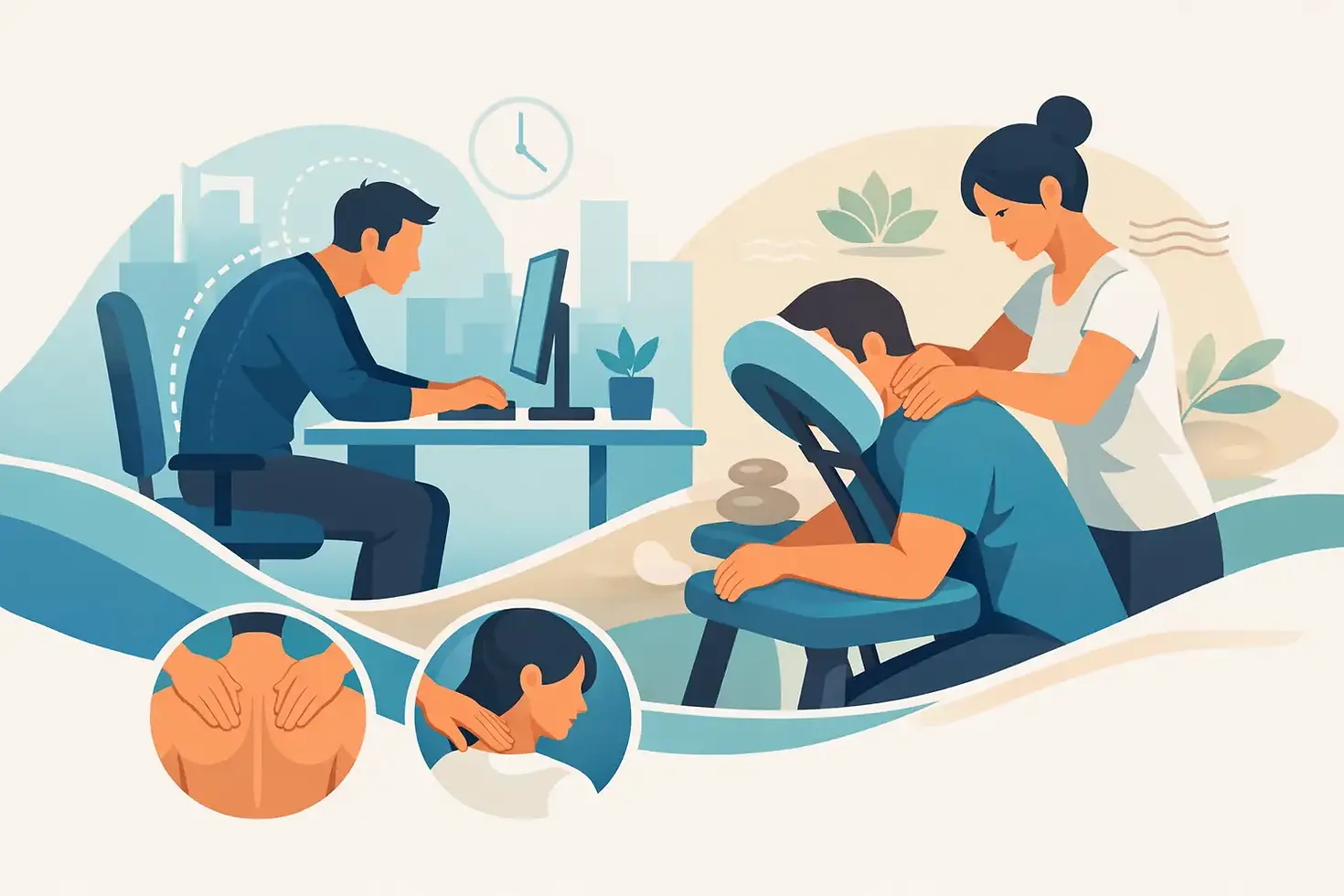
Massage Plan for Desk Posture That Works

By the time your shoulders start creeping toward your ears at 2:00 p.m., your body has usually been compensating for hours. Desk work rarely hurts all at once. It builds quietly through rounded shoulders, a forward head position, tight hips, and the kind of low-grade tension that starts as “just stiffness” and turns into a pattern. A well-designed massage plan for desk posture helps interrupt that pattern before it becomes your new normal.
The key is to think beyond a single session. If posture strain has been building over months or years, the most effective care usually combines hands-on treatment, a realistic schedule, and a few simple changes you can actually maintain between appointments. Relief matters, but consistency is what creates change.
Why desk posture creates stubborn tension
Most desk posture issues are less about one dramatic misalignment and more about repetition. Sitting for long periods often shortens the front of the body while overloading the muscles that try to keep you upright. The chest can become tight, the upper traps and neck muscles overwork, the mid-back loses movement, and the low back or hips start absorbing stress they were never meant to carry all day.
That is why desk-related discomfort can show up in different places at once. You may feel neck tension, headaches, shoulder restriction, wrist fatigue, or an ache between the shoulder blades. Someone else may notice low back tightness or numbness that starts after long meetings. The source is not always where the pain is loudest.
Massage can help because it addresses both the sensation and the pattern. Soft tissue work improves circulation, reduces protective muscle guarding, and restores a better sense of movement. When done thoughtfully, it also gives your body a chance to reset out of its usual holding strategy.
What a massage plan for desk posture should include
A strong massage plan for desk posture is personalized, but the general framework stays fairly consistent. First, there should be an assessment. Not a rushed intake and not guesswork. A therapist should look at where you feel discomfort, how long it has been happening, what your workday looks like, and which areas seem to be compensating.
From there, treatment usually focuses on a few key regions. The neck and upper shoulders often need attention, but they are rarely the whole story. The chest, front shoulders, scalp, jaw, mid-back, low back, glutes, and hips may all play a role. If your shoulders round forward all day, for example, releasing only the upper traps may feel good temporarily without changing the overall pull on your posture.
The plan should also match your goals. Some clients want fewer tension headaches. Others want to sit through a workday without feeling compressed, or they want better mobility for workouts after work. Those goals matter because they influence pacing, pressure, and how often you come in.
How often should you get massage for desk posture?
This depends on how intense the tension is, how long it has been present, and what you do between sessions. If you are in a flare-up phase with persistent neck, shoulder, or low back tightness, starting with sessions every one to two weeks often makes sense. That frequency helps your body adapt before the old tension pattern fully returns.
Once symptoms ease and movement improves, many people do well shifting to a maintenance rhythm every three to four weeks. That schedule tends to work well for busy professionals because it supports steady progress without becoming unrealistic.
There is a trade-off here. Weekly sessions can accelerate change for some clients, especially when pain is affecting sleep, concentration, or exercise. But if weekly care creates stress around scheduling or budget, a plan you cannot sustain will not serve you well. A realistic cadence is better than an ideal one that falls apart after a month.
The techniques that tend to help most
For desk posture, effective massage is usually targeted rather than generic. Swedish massage can be valuable for stress reduction and overall decompression, especially if your body is holding tension globally. But if posture strain is more established, deeper therapeutic work may be needed in specific areas.
Myofascial techniques can help where tissues feel bound and movement is limited. Trigger point therapy may reduce referral pain into the head, shoulder blade, or arm. Neuromuscular work is often useful in overactive neck and shoulder muscles that have been doing too much for too long. Gentle stretching and mobility-based work can also help the body accept a new resting position instead of snapping right back into stiffness.
Still, more pressure is not always better. Many desk workers already live in a state of low-grade guarding. If treatment is too aggressive, the body may brace rather than release. The best work is often precise, responsive, and adjusted to how your tissues are actually presenting that day.
Areas that are often overlooked
People usually book because their neck or shoulders hurt, but desk posture patterns often involve the rib cage, jaw, forearms, and hips. If you spend all day typing, forearm tension can contribute to wrist discomfort and even change how the shoulders carry load. If you clench during stressful work, the jaw and upper neck can keep headaches cycling. If the hips stay flexed for hours, the pelvis may lose balance and the low back starts paying for it.
This is where integrated care stands out. A more complete session looks at the body as a connected system, not a set of isolated sore spots. That approach is often what makes the difference between short-term relief and meaningful improvement.
What to do between sessions so massage lasts longer
Massage works best when your daily habits stop undoing the progress. That does not mean you need a perfect ergonomic setup or a 45-minute mobility routine. Small changes, done consistently, matter more.
Your screen should be at a height that keeps your head from drifting forward. Your feet should feel supported. Your elbows should not have to hover. Even a modest adjustment in monitor height or chair support can reduce strain over the course of a week.
Movement breaks also matter more than most people realize. Standing up every 30 to 60 minutes, rolling the shoulders, opening the chest, or taking a brief walk helps prevent the body from hardening around one position. If your schedule is packed, set a quiet reminder. You do not need a long reset, just a consistent one.
Breathing is another underused tool. Shallow chest breathing tends to reinforce upper body tension. Slower, fuller breaths can help relax the neck, ribs, and shoulders while improving your awareness of how you are holding yourself during the workday.
When posture discomfort needs more than massage
Massage is a strong part of care, but it is not the answer to everything. If you have tingling, persistent numbness, sharp radiating pain, significant weakness, or symptoms that keep worsening, a broader evaluation may be appropriate. Sometimes what feels like “posture pain” also involves nerve irritation, joint dysfunction, or an underlying condition that needs another layer of support.
That does not make massage less useful. It simply means care should be coordinated wisely. The most professional approach is honest about what massage can do well and where additional guidance may help.
Building a plan that feels sustainable
The best posture care is not punishing. It should feel supportive, clear, and grounded in your real life. If your work keeps you at a desk most of the day, your plan should account for that. If you travel often, your treatment schedule may need to be more flexible. If stress is a major driver of tension, relaxation-focused work may be just as important as structural work.
At Atlanta Touch Therapy, this kind of planning is part of what makes treatment feel more personal and more effective. A session should not feel like a generic routine applied to everyone with a laptop job. It should reflect your workload, your tension patterns, and what your body is asking for right now.
If you have been stretching your neck, switching chairs, and hoping the discomfort will fade on its own, it may be time for a more intentional approach. A thoughtful massage plan for desk posture can help your body feel less compressed, more mobile, and more like itself again. Start with consistency, stay honest about what your body is carrying, and give the process enough room to work.


Comments